

One afternoon in 1998, Dr. John Gottman received a call from a woman at Seattle Children’s Hospital on behalf of the newspaper Seattle’s Child. She wanted to know if John could give a keynote lecture about the effects of parenthood on marriage and relationships. Though he hadn’t performed research focused on early parenthood, he had collected data on new parents in his long-term study on newlyweds, which yielded interesting statistics that could be shared with the public. Together with his wife, Dr. Julie Schwartz Gottman, he began to search through the data describing the couples who had babies and was stunned by what he found.
Research results: The Masters and Disasters
Sixty-seven percent of couples became very unhappy with each other during the first three years of their baby’s life. Only 33% remained content.
Shocked by these numbers, Drs. John and Julie Gottman were compelled to perform further research on the subject. What was going on in these relationships? How did the happy couples remain happy when exposed to the same stressors that made the other couples fall apart? What differentiated the “masters” of transition to parenthood from the “disasters?”
Discoveries from the research
In sixteen studies conducted on parents before and after their child’s birth, Drs. John and Julie Gottman and their associates discovered the following:
- Though both parents work much harder after the birth of their child, they both feel unappreciated.
- In the year following the baby’s arrival, the frequency and intensity of relationship conflicts increases significantly.
- Mom’s sexual desire tends to drop considerably, normally staying low throughout the first year of baby’s life, particularly if she is nursing. As a result, the frequency of sex declines dramatically. <
- Moms usually get very involved with the baby and are too fatigued to offer their partners much in the way of emotional connection.
- Moms and dads both undergo enormous changes in identity—thinking of themselves not only as parents and partners, but as members of a greater family: friends, brothers, sisters, sons, daughters.
- Parents often find their values changing vastly, along with their goals in life.
- Couples want to be better parents for their child than their own parents were with them.
- As the relationship changes, it begins to take on a different life: “Before Baby” and “After Baby.”
- As soon as Baby is born, Mom’s friends arrive on the scene—a society of women who have come to help. New dads can feel excluded and crowded out and are likely to respond by removing themselves from the situation. They often withdraw from the baby and from Mom, working more, while trying to avoid conflict.
- When Mom is unhappy, her baby does not retreat. The same is not true for Dad. A child tends to withdraw emotionally from a father who is unhappy in his relationship with Mom—a tragic gulf grows between him and his child.
Masters of transition to parenthood navigated the stressors and life changes accompanying the birth of their baby with success. They found ways of dealing with the normal challenges of new parenthood, while the unhappy “disaster” couples could not. They were overwhelmed.
‘Bringing Home Baby’ was born
The desire to answer the questions raised by this research led John and Julie Gottman to write their acclaimed book, And Baby Makes Three. In it, they show couples the way to smoothly navigate the transition to parenthood.
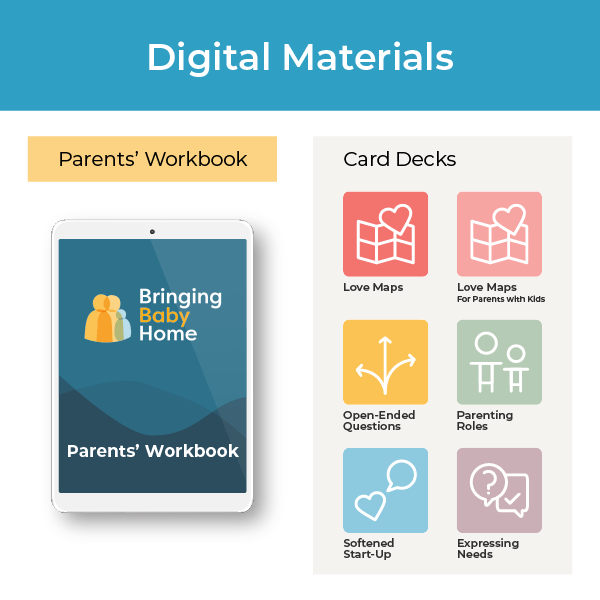
Along with the release of their book, Drs. John and Julie Gottman’s research on parenthood gave birth to a new program: Bringing Baby Home.
The following blog posting shares an exclusive interview with the directors of the program Joni Parthemer and Carolyn Pirak.
Below is a clip of Dr. Gottman speaking about his research on the transition to parenthood:
Sign Up and Join Our Community!
Sign Up and Become a Super Parent
Become a Super Parent
As a Super Parent you get:
- Exclusive access to the Gottman Parenting Newsletter
- Special pricing offers and discounts
- $58 saving on the Gottman Toddlers Bundle
- Parenting tool and case study on "Toddler Boundaries and Meltdowns: The Secret to Setting Limits"
- Get weekly notifications of new Parenting Blog Posts






2 Responses
I work mainly with unwed, single, low income mothers (crisis pregnancy center). Is the material heavy towards being a couple? We don’t want to go through the training and then not be able to use most of the materials due to it not being fully relevant to our clientele
Hi Jenny- Yes, the Bringing Baby Home program is focused on how having a baby impacts the couple’s relationship and how to protect and strengthen the relationship during this major transition time.