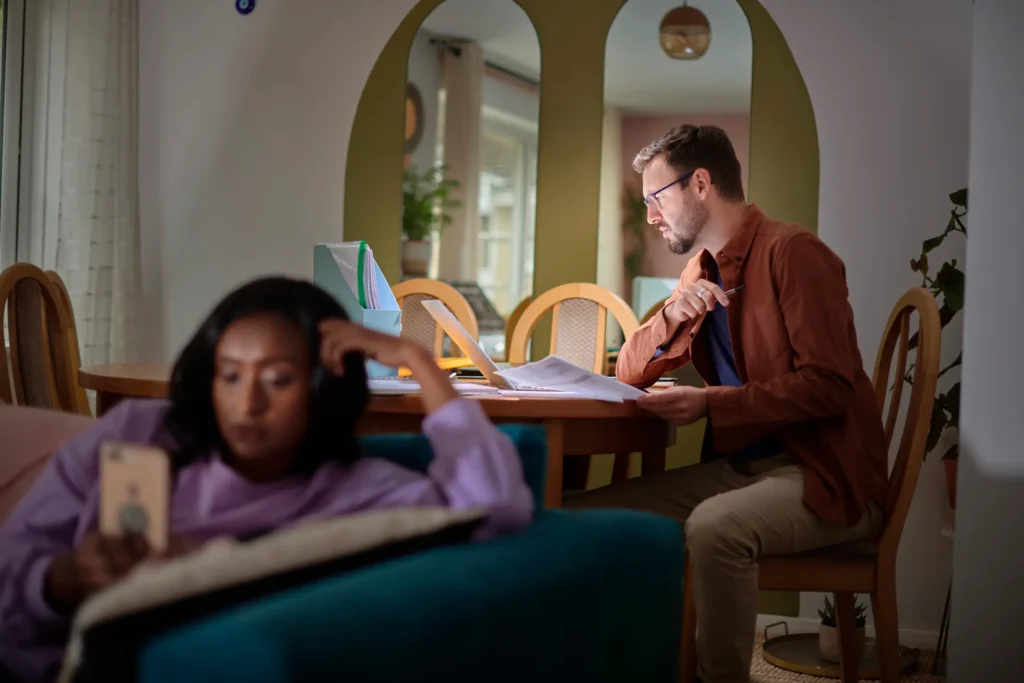
That’s not the kind of gridlock I’m talking about. What I’m talking about is the emotional traffic jam that happens in a relationship which has all the same accompanying emotions and more – feeling stuck, frustrated, or powerless. The holiday season is as good a time as any to reconsider how to approach gridlocked problems that arise in your relationship.
In Dr. Gottman’s New York Times bestselling book The Seven Principles for Making Marriage Work, he points out that 69% of conflicts in relationships are about unresolvable issues. You’d still have them even if you married someone else, they’d just be a different set of perpetual problems.
Relationship gridlock is a state in which your argument with your partner has come to a standstill because you both disagree on how to move forward. A couple can experience gridlock on any issue, and often the more gridlocked they are, the more gridlocked they become on other things as well.
Gridlock is difficult because it is often caused by our deepest dreams, desires and feelings being blocked. I’ve seen couples come to a standstill on topics such as how to raise kids, practicing a certain faith, or taking a new job. Overcoming gridlock this holiday season is the best gift you can give your relationship.
What To Do When You Feel Stuck
Ironically, gridlock is an opportunity. I know it feels terrible in the moment, but it actually can create an opportunity for you to better understand your partner and become closer to them. Here are some exercises you can do to help move you out of a complete standstill.
1. Empathize with your partner.
As difficult as it might be, try to ask them details about their point of view. Chances are there is a story behind their desires. Find out their story, listen carefully, and empathize.
2. Be respectful.
You don’t have to understand or agree with your partner’s perspective, but it’s important to accept it. Saying “Well, your way of celebrating Christmas is crazy” will alienate your partner and possibly prevent further discussion. Being respectful is a choice and helps define the kind of partner you want to be.
3. Make temporary compromises.
Dr. Gottman’s research shows that you don’t need to and probably won’t solve your problem. Chances are you will keep talking about these issues for decades. The trick is to get accustomed to talking to each other in a particular way that allows you to find common ground and to make temporary compromises.
4. Recall the honeymoon phase.
Remember when you first met and traded stories over dinner? You laughed together and shared personal details. You weren’t trying to change one another; you were celebrating the new person that you just met. Get back into that mindset this season. When your partner suggests an idea, recall what you may have said during the first few dates and try saying something similar. Be open to suggestions!
Finding a Middle Ground
Unresolvable issues are inevitable since we are growing and changing as people. As uncomfortable as it is to disagree with your partner, it is part of the deal when you decide to be with another person. Psychologist Dan Wile says it best in his book After the Honeymoon: “When choosing a long-term partner, you will inevitably be choosing a particular set of unresolvable problems.” They will change over the years, and while it might sound scary, it is also a chance to deepen your connection and to continue to get to know one another better over time.
A good compromise does require two people to have self-respect and respect for their partner. Everyone has values and dreams, but you can still find some common ground. Dr. Gottman calls this the “flexible area.” Perhaps you don’t want your kids to practice your partner’s faith as children, but maybe you are OK with them celebrating the holidays, with the caveat that they will choose for themselves when they’re old enough. Perhaps you want a dog and your partner doesn’t, so you might agree to cover the costs of taking care of the dog.
You don’t need to change your mind for your partner or act in ways that don’t make sense for you, but you do have to be nice to one another and to allow each other to grow. The alternative is akin to being stuck in traffic for a long, long time.
Yielding to Win
One of the most powerful ideas related to relationship gridlock is the concept of yielding . To yield is to summon your best self and offer your partner grace and acceptance. Yielding requires emotional intelligence and love for your partner, but it works because your partner is more likely to see your kindness and return the favor. Saying “yes” is an act of faith and a decision to move forward in your relationship instead of staying stuck.
Overcoming Gridlock This Holiday Season
Remember, it is by your side that your partner wants to grow. You are co-creators of your lives together. Allowing room for both partners to be happy during the holidays will breathe new life into every part of your bond, your friendship, and your romance throughout the year.