

0

A Deeper Look Into Turning Towards Your Partner

Here are the different ways you can "turn towards" your partner's bids.

On the Gottman Relationship Blog, we often talk about “turning towards” and “turning away” from bids for attention from your partner. If you’ve attempted to apply these research-based findings to your own relationship and found that the task of integrating science into reality is difficult, this post is for you.  Here are some examples to better clarify different types of “turning towards.” Dr. Gottman’s definitions for the following behaviors are given below, as well as examples to clarify the ways they may be expressed. For the sake of this exercise, we are going to keep the bid the same in each scenario:

Nearly passive responses

These are mild shifts in behavior with no verbal response. Your partner may not stop what they are doing, but you know that you’ve been heard. Sam: “Do you want to order out tonight?” Tracey: “Mmmm”

Low energy responses

These involve a few words or a question to clarify a bid. Sam: “Do you want order out tonight?” Tracey: “Fine. From where?”

Attentive responses

These involve opinions, thoughts, and feelings. Sam: “Do you want to order out tonight?” Tracey: “That sounds great. You like that Thai place down the street?”

High energy responses

These involve full attention with good eye contact. High energy responses may be enthusiastic, include humor or affection, and/or sincere empathy. Sam: “Do you want to order out tonight?” Tracey: “That’s a great idea. I know how stressed you’ve been lately. Where do you want to order from? I feel like Thai tonight.” Try to notice the ways in which you and your partner respond to such bids for attention, empathy, or connection in your interactions. This first step (becoming attuned to the ways in which the two of you interact) will be vital to making the kinds of change necessary: reducing stress, creating an atmosphere of trust, being able to support each other, expressing your mutual love without getting lost in miscommunication. Try to engage with your partner with the latter two response types: Attentive and High Energy. Though daily life can obviously be tiring, you may find yourself too overwhelmed to respond with High Energy responses all the time. Let them be your ultimate goal, and know that practicing the latter two response types will become easier over time. As you build healthy patterns of communication with your partner, you are likely to evince similar effort on their part, helping each other to build mindfulness in emotional moments as well as in everyday conversation.
Emotional Literacy

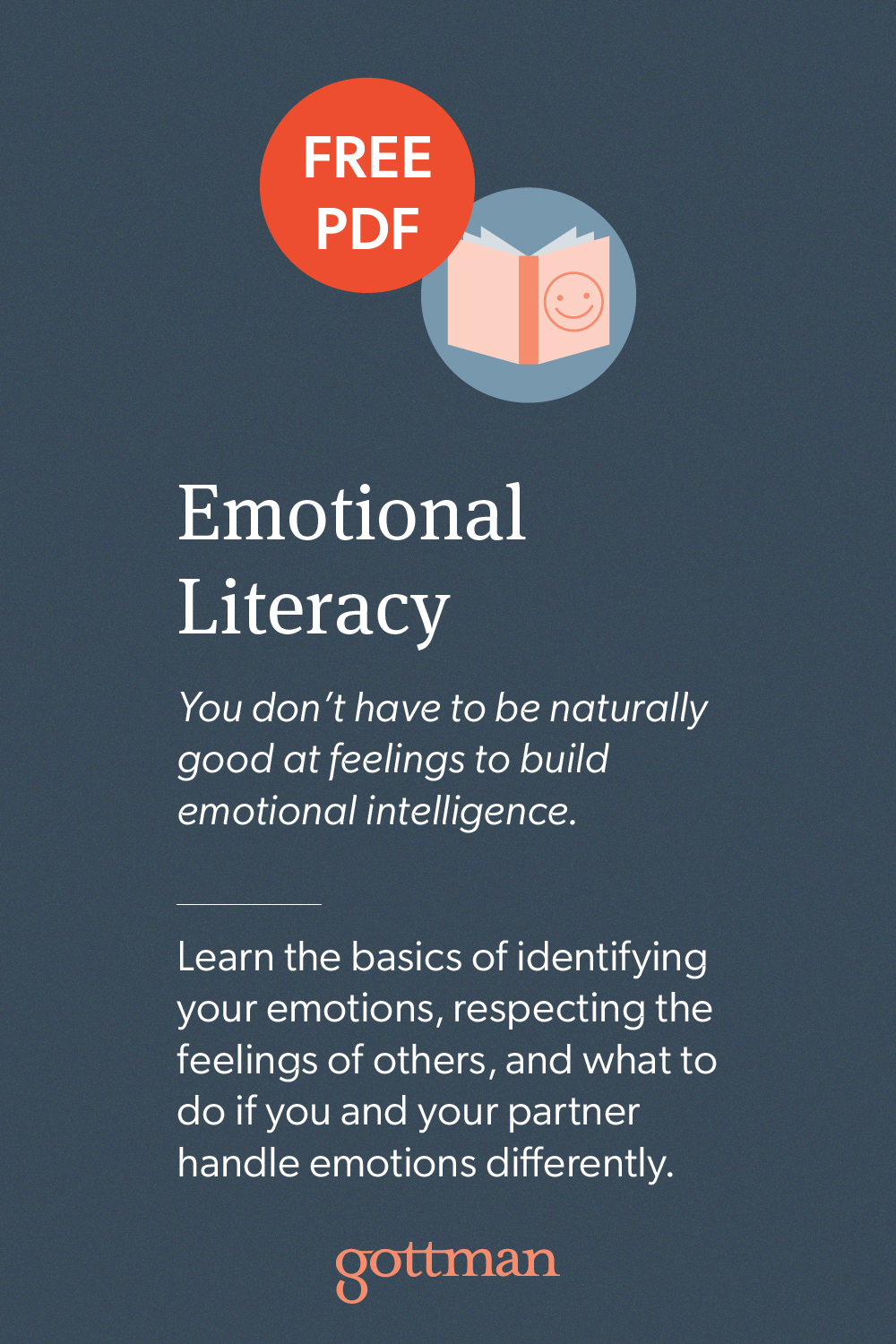
FREE Download | Emotional Literacy

Sign up for the Gottman Love Notes Newsletter to receive your free guide on emotional literacy. Learn about emotional intelligence, meta-emotions, and how to express feelings in a healthy way.

Ask Gottman

Your email address will not be published. Required fields are marked *

Ellie Wilde holds a PhD in Clinical Psychology, and is the founder of Whale Being Therapy, specializing in helping you build stronger, more connected  relationships. Drawing on extensive training in trauma and nervous system support, she blends evidence-based somatic practices with creativity, play, and embodied imagination, helping you break free from stuck patterns and rediscover connection, awe, wonder, and joy.

Recommended products

Original price was: $250.00.Current price is: $189.00.

The Gottman Relationship Adviser is a complete approach to relationship wellness. Measure your relationship health with the research-based Gottman Assessment, analyze five key areas of your partnership to identify your strengths and weaknesses, then start a tailored, step-by-step digital program proven to heal and strengthen your connection—all on your schedule and from anywhere.

The Adviser uses the legendary scientific Gottman Method to help you understand what’s really going on in your relationship—and gives you exactly what you need to improve it.


Original price was: $119.00.Current price is: $79.00.

Research-based Foundations for a Lifetime of Love.  The Gottman Relationship Coach is an inspiring and educational multimedia experience designed to enhance the well-being of relationships. Participants will be guided through research-based tools and communication skills that can transform relationships—all based on the popular Gottman Method. The first program, “How to Make Your Relationship Work”, is now available and includes:

  • The Gottman Method and How to Make Your Relationship Work
  • How do we predict the future of a relationship?
  • How to build a Sound Relationship House
  • What to do when the destructive Four Horsemen enter your relationship

“Buy Now” will take you to GOTTMAN CONNECT to purchase and view this product.

$799.00

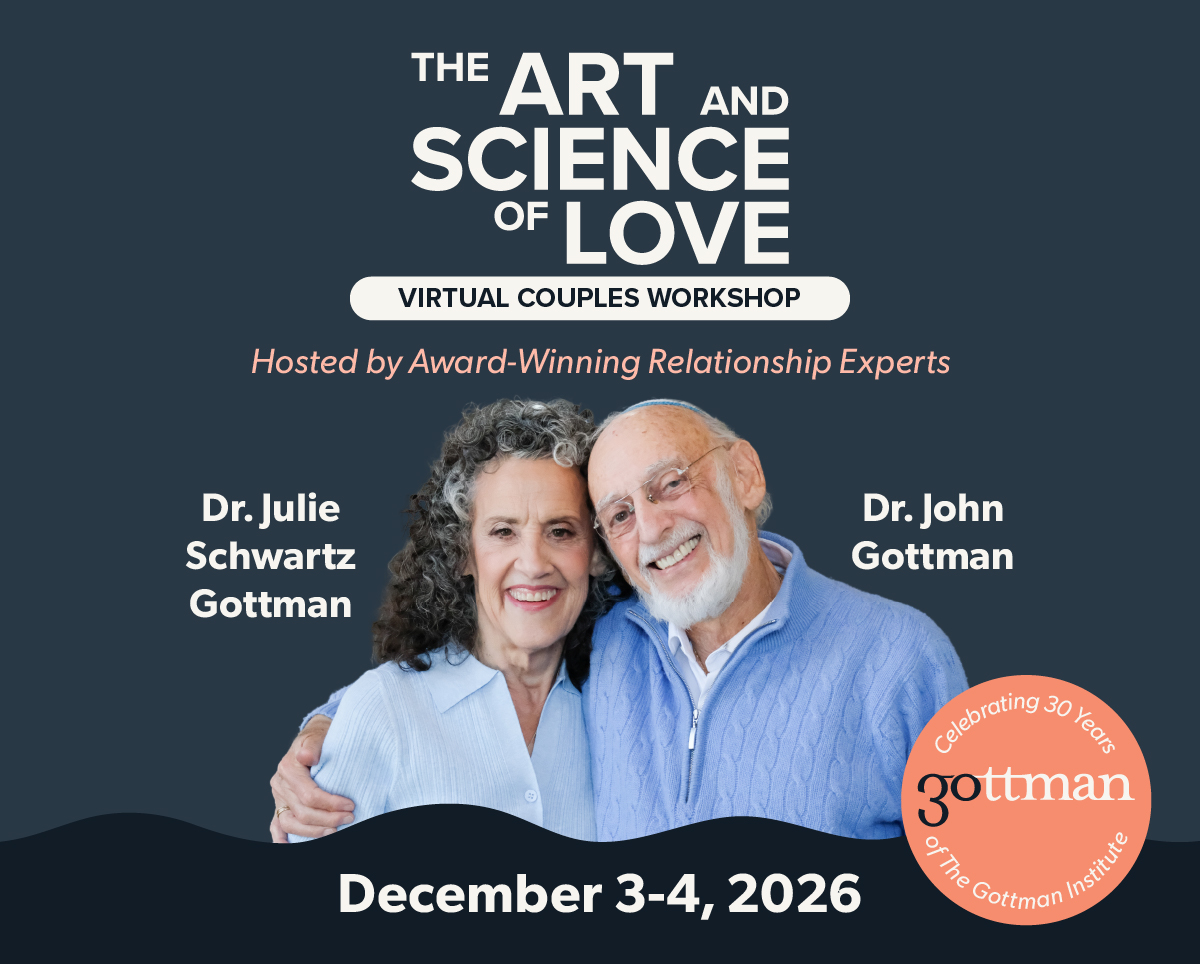
Created by “the Einstein of Love” (Psychology Today), this two-day workshop is grounded on what actually works in relationships that are happy and stable. See for yourself why millions of couples worldwide have benefited from the Gottman Method.

Quote from participant in most recent Live Virtual Workshop:

The Art and Science of Love workshop- where do I begin? It was an absolute stellar workshop. We were looking forward to this for weeks, and it exceeded our expectations! It was well-structured, and well-organized, and provided a wealth of information with real-time demonstrations of how to work through specific scenarios. The outstanding support that was provided throughout the exercises with therapists on standby- WOW! Priceless!

Includes the Art & Science of Love box set.  Please allow time for shipping.  Please Note: This is a live online event. To attend, you will need a reliable internet connection. Our staff will reach out to you with your personal registration and access information.

Related posts

Emotional cheating: a woman alone at a coffee-shop table, hand against her cheek, behind a dark pillar

How a Coffee-Shop Friendship Can Turn Into Emotional Cheating

Alexander Elguren

He told himself it was innocent. He didn't tell his wife.

Read More

A couple at a dark table, each looking down at a phone, not at each other

Phubbing Is Rarely Malice. It Still Can Hurt.

Alexander Elguren

What the Word Means, and When It Becomes a Problem Between You.

Read More

A couple at a cafe window: she looks past the camera in sunglasses while he leans on the counter and looks toward her, the kind of moment a partner can read as emotionally unavailable.

When Your Partner Seems Emotionally Unavailable

Alexander Elguren

You are not imagining the distance. You may be misreading it.

Read More

Situationship: a woman looks into the camera while a man sleeps against her back on a dark sofa

Situationship: Is Trust Growing or Just Time Passing?

Alexander Elguren

You may like each other. But nobody has said what this is.

Read More

A wife trying to express her needs to an exasperated husband.

The Myth of Being “Too Needy” in Relationships

The Gottman Institute

Have you ever been told that you are too needy by your partner? Learn why this may be happening and why the idea of 'too needy' is a myth.

Read More

A couple saying goodbye as their adult daughter moves out.

Liminal Space: Maintaining Connection Through Life’s Major Transitions

The Gottman Institute

Major life changes often lead to a disorienting liminal space. Discover how to overcome communication barriers and strengthen your relationships here.

Read More

Improve your Relationship Skills with our Free Newsletters
0