Longitudinal research on newlywed couples discovered that stable and happy couples are more responsive to slight changes in negativity than ailing marriages.
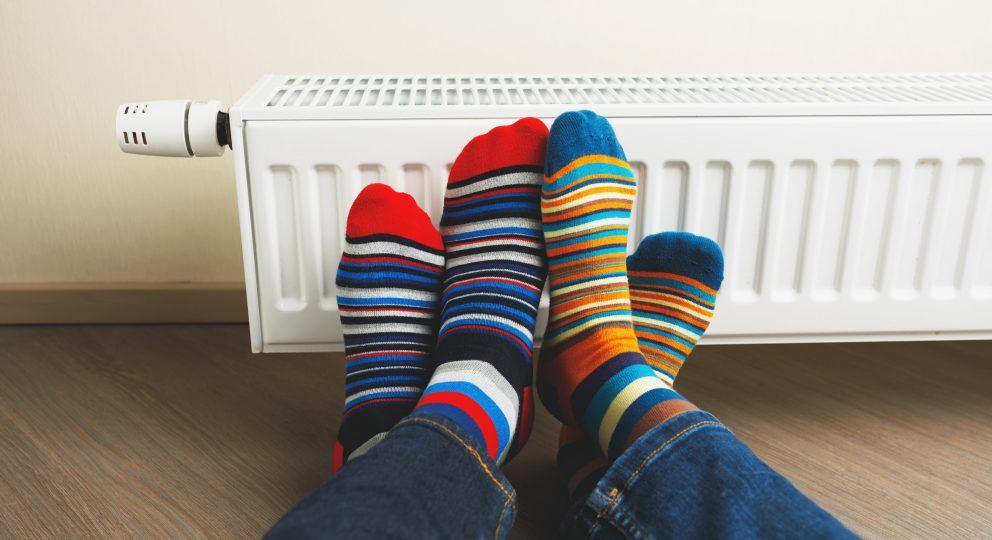
It’s like every relationship has a connection thermostat that signals how well the relationship is doing. Ideally, you want to find that balance between hot and cold so you can feel secure, connected, and cherished.
The problem is, like a house, the thermostat is bound to change from time-to-time based on what happens on the outside. Every relationship is going to feel hot or cold.
The more sensitive you are to the emotional temperature changes and work together to return to the comfort zone of connection, the better chance your relationship has at staying positive and healthy.
The relationship thermostat
In my relationship, my thermostat has a burning point of volcanic anger and a freezing point of ice-cold distance and indifference. When I am too hot, I am critical, defensive, and contemptuous. I become emotionally flooded and say things I don’t believe about my partner and our relationship. It’s like my body is on fire and if my partner gets closer, I’ll burn her.
When I am too cold, I preoccupy myself with work and offer less spontaneous acts of affection throughout the day. I ask less questions and keep to myself more. And when my partner expresses something, I am less engaged. At my freezing point, I appear apathetic when she is hurting. That is not the partner she needs in those painful moments.
My spouse has her own hot and cold points, but with different behaviors.
Luckily for us, we rarely get to these extremes because those temperature points are difficult and painful.
One of the hard lessons we had to learn to keep our emotional connection temperature at a more loving level was the importance of addressing things earlier.
The secret of stable relationships: Address things early
This knowledge came from Dr. Gottman’s research, “In marriages that wind up happy and stable, newlywed [spouses] notice lower levels of negativity…In other marriages, [spouses] adapt to and try to accept this negativity, setting their threshold for response at a much higher (more negative) level.”
In relationships that struggle, there is a tendency to tolerate a hotter or colder connection temperature. Dr. Gottman shares, “It’s as if they are saying to themselves, ‘Just ignore this negativity. Don’t respond to it unless it gets much worse.’ Our research shows that this kind of adaptation to negativity is dysfunctional.”
Dr. Gottman goes on to say that, when partners adapt to hotter or colder connection temperatures, it also increases their “threshold” for determining when things are problematic. This means that those partners will feel like help is not needed since they’ve increased the acceptable range of negativity.
In my relationship, I like to imagine our thermostat is like our home’s thermostat. If we get emotionally hotter than 73 or colder than 68, that is a cue that we need to readjust our thermostat and reconnect.
Essentially Dr. Gottman’s research indicates that healthy couples are more nuanced to changes in the emotional connection. Most importantly, they see the change in relational temperature as a cue to check-in with their partner or open up. They turn towards one another.


Practical tools to reset your relationships thermostat
1: Repair
When the temperature in your relationship is uncomfortable, that is a cue that a repair is needed to reset at a more connecting level. To learn more read: Repair is the Secret Weapon of Emotionally Connected Couples.
2: Discuss Cues of Your Relationship’s Thermostat
It’s helpful to start with discussing what the relationship feels like when things are going well. Talk about how it feels in your body, the thoughts you have, as well as how you engage one another.
In my marriage this includes more humor, physical affection, and a felt sense of being understood when discussing an issue. Outside of conflict, there are lots of positive interactions, and during conflict, we are probably close to the magic 5:1 ratio since we tend to use speaker-listener roles.
Then talk about how you think you two get to this place and what helps keep this temperature.
Discuss Disconnection Cues: Use Drs. John and Julie Gottman’s “Relationship Poop Detector” to determine cues that your relationship’s temperature is too hot or too cold. This includes the Four Horsemen, feeling distant and isolated, or not being affectionate and intimate.
The more awareness you have of what pulls you apart, the easier it will be to say, “oh no, we are too hot. Can we talk and reset our temperature please?”
3: The Conflict Toolkit
Sit-down together and dialogue about what’s changed the thermostat using conflict blueprints: To prevent negativity from making things too hot or cold, use the Gottman Conflict Blueprints such as the Gottman-Rapoport and The Aftermath of a Fight.
As a speaker, remember to help your partner understand your side and give them a recipe to be successful with you.
As the listener, remember to soothe yourself so you can hear your partner and seek to understand before problem-solving.
4: Proactively Check Your Relationship’s Temperature:
Instead of waiting until your relationship is sweating with negativity or shivering from a cold loneliness, proactively check each other’s emotional temperature daily, “How are we doing today from your perspective? What’s going well? What is something we can do better?” On a weekly or monthly basis, you can use the State of the Union Meeting as well as check-in on how you’re well you’re maintaining the Magic 6-Hours a Week
Finally, do not wait more than 3 days to address an issue that is making the relationship too hot or too cold. The secret to keeping things comfortable is to address the uncomfortable issues that pull you two apart.